
IT Manager: The Backbone of Modern Business Technology
IT Manager: In this technology driven age it’s very unlikely that the role of IT Manager has just expanded in its definition from fixing computers or looking after servers. IT Manager is the role that is right at the center of the business strategy and technology; it ensures the operation of the systems, productivity of the team and the success of the organization.
Are you curious to know what exactly it is that an IT Manager does, the skills needed or if it is a suitable role for you, this practical and comprehensive humanized guide will tell you more.
What exactly is IT Manager?
IT Manager stands for Information Technology Manager and is a professional who takes responsibility of controlling an organizations technology setup, managing the relevant IT staff and correlating technology with the business strategy.
Simple Definition:
An IT Manager ensures that all technology systems in a company work efficiently, securely, and support business growth.
They are not just technical experts—they are also planners, leaders, and problem-solvers.
Why IT Managers Are More Important Than Ever
Think about it: almost every business today depends on technology—whether it’s cloud storage, customer databases, or cybersecurity systems. Without proper management, even a small technical issue can disrupt operations.
Key reasons IT Managers are crucial:
- Businesses rely heavily on digital systems
- Cybersecurity threats are increasing daily
- Remote work demands stronger IT infrastructure
- Data-driven decisions require reliable systems
An IT Manager ensures stability in all of these areas.
Core Responsibilities of an IT Manager
The role of an IT Manager can vary depending on company size and industry, but the core responsibilities remain consistent.
Managing IT Infrastructure
This includes:
- Servers
- Networks
- Hardware and software systems
They ensure everything runs smoothly without downtime.
Leading IT Teams
IT Managers supervise:
- System administrators
- Network engineers
- Support staff
They assign tasks, track progress, and guide team members.
Cybersecurity Oversight
Protecting company data is a major responsibility:
- Implementing security protocols
- Monitoring threats
- Ensuring compliance
Strategic Planning
IT Managers align technology with business goals:
- Planning upgrades
- Budgeting IT expenses
- Choosing the right tools
Troubleshooting & Problem Solving
When something breaks, they:
- Diagnose the issue
- Coordinate fixes
- Prevent future problems
Key Skills Every IT Manager Needs
Being an IT Manager is not just about technical knowledge—it’s a mix of technical expertise and leadership skills.
Technical Skills vs Soft Skills
| Technical Skills | Soft Skills |
| Network management | Leadership |
| Cloud computing | Communication |
| Cybersecurity | Problem-solving |
| Database management | Decision-making |
| System administration | Time management |
Must-Have Traits:
- Ability to stay calm under pressure
- Strong analytical thinking
- Adaptability to new technologies
- Clear communication with non-technical teams
Daily Life of an IT Manager
A typical day is rarely “typical.” It’s a mix of planning, meetings, and solving unexpected issues.
A Day in the Life:
- Morning: Check system performance and reports
- Midday: Team meetings and project updates
- Afternoon: Strategic planning or vendor discussions
- Anytime: Emergency troubleshooting
No two days are the same—and that’s part of the challenge.
Educational Requirements
Most IT Managers follow a structured academic path, but real-world experience is equally important.
Common Degrees:
- Computer Science
- Information Technology
- Software Engineering
- Information Systems
Certifications That Help:
| Certification | Purpose |
| CompTIA Security+ | Cybersecurity fundamentals |
| AWS Certified Solutions Architect | Cloud expertise |
| Cisco CCNA | Networking skills |
| ITIL | IT service management |
| PMP | Project management |
These certifications boost credibility and career growth.
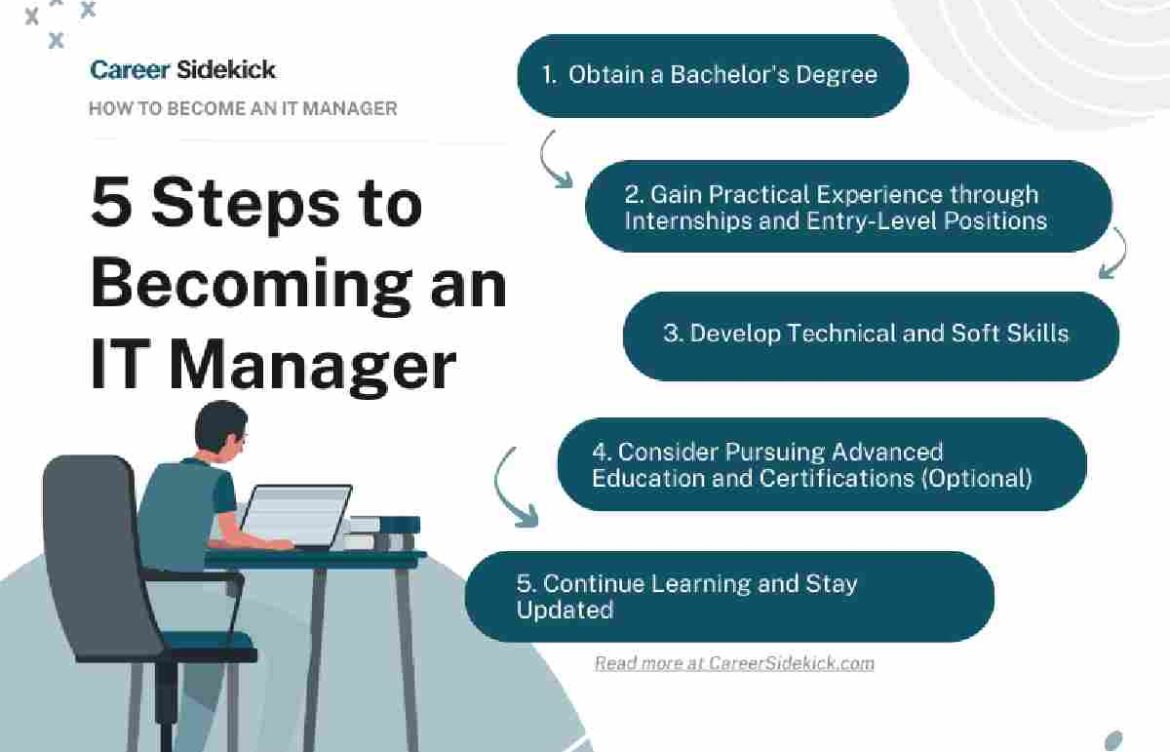
Career Path to Becoming an IT Manager
You don’t become an IT Manager overnight. It usually takes years of experience.
Typical Career Journey:
- IT Support / Help Desk
- System Administrator / Network Engineer
- Senior IT Specialist
- IT Manager
Experience is key—especially in handling real-world challenges.
IT Manager Salary Overview
Salaries vary based on location, experience, and company size.
Average Salary Table:
| Experience Level | Average Salary (India) | Average Salary (Global) |
| Entry-Level | ₹4–8 LPA | $60,000 – $80,000 |
| Mid-Level | ₹10–18 LPA | $90,000 – $120,000 |
| Senior-Level | ₹20+ LPA | $130,000+ |
Higher salaries often come with leadership roles and specialized skills.
Tools Used by IT Managers
IT Managers rely on a variety of tools to manage systems efficiently.
Common Tools:
| Category | Tools Examples |
| Project Management | Jira, Trello, Asana |
| Monitoring Tools | Nagios, SolarWinds |
| Cloud Platforms | AWS, Azure, Google Cloud |
| Security Tools | Firewalls, antivirus software |
| Communication | Slack, Microsoft Teams |
Choosing the right tools can significantly improve productivity.
Challenges Faced by IT Managers
The role is rewarding—but not without its challenges.
Common Challenges:
- Managing tight budgets
- Keeping up with rapid tech changes
- Handling security threats
- Managing team performance
- Dealing with unexpected downtime
An IT Manager must stay proactive rather than reactive.
IT Manager vs Other IT Roles
Many people confuse IT Managers with other roles.
Comparison Table:
| Role | Key Focus |
| IT Manager | Strategy + team leadership |
| System Admin | System maintenance |
| Network Engineer | Network design and performance |
| IT Support | User-level troubleshooting |
An IT Manager oversees all these roles but doesn’t necessarily perform each task daily.
Future of IT Management
The future looks promising—and demanding.
Emerging Trends:
- Artificial Intelligence integration
- Cloud-first infrastructure
- Remote workforce management
- Automation of routine tasks
IT Managers will need to adapt quickly to remain relevant.
How to Become a Successful IT Manager
Let’s keep it real—technical skills alone won’t get you there.
Practical Tips:
- Keep learning (technology changes fast)
- Build leadership skills early
- Understand business, not just tech
- Network with professionals
- Gain hands-on experience
Success comes from balancing technical depth and leadership vision.
IT Manager in Small vs Large Companies
The role differs based on company size.
Comparison:
| Small Company | Large Company |
| Handles multiple roles | More specialized tasks |
| Limited resources | Larger budgets |
| Direct decision-making | Structured hierarchy |
| More hands-on work | More strategic focus |
In smaller firms, IT Managers often wear multiple hats.
Work Environment and Lifestyle
IT Managers usually work in:
- Corporate offices
- IT companies
- Government organizations
- Remote setups
Work-Life Balance:
It depends heavily on the organization. During system failures or upgrades, long hours are common.
Soft Skills That Make a Difference
Technical knowledge may get you the job—but soft skills help you succeed.
Important Soft Skills:
- Emotional intelligence
- Conflict resolution
- Team motivation
- Clear communication
An IT Manager often acts as a bridge between technical and non-technical teams.
Common Mistakes to Avoid
Even experienced professionals can slip up.
Avoid These:
- Ignoring cybersecurity risks
- Poor communication with stakeholders
- Not updating systems regularly
- Micromanaging teams
- Failing to plan for scalability
Learning from mistakes is part of the journey.
Conclusion
The IT Manager is an increasingly critical and central position within business as organizations depend on technology.
With the necessary skill sets, experiences and aptitude for management and business technology, there is opportunity for career success in IT Management.
Whether you are early in your career or looking for your next career change, pursuing IT Management will likely serve as a rewarding career move.