
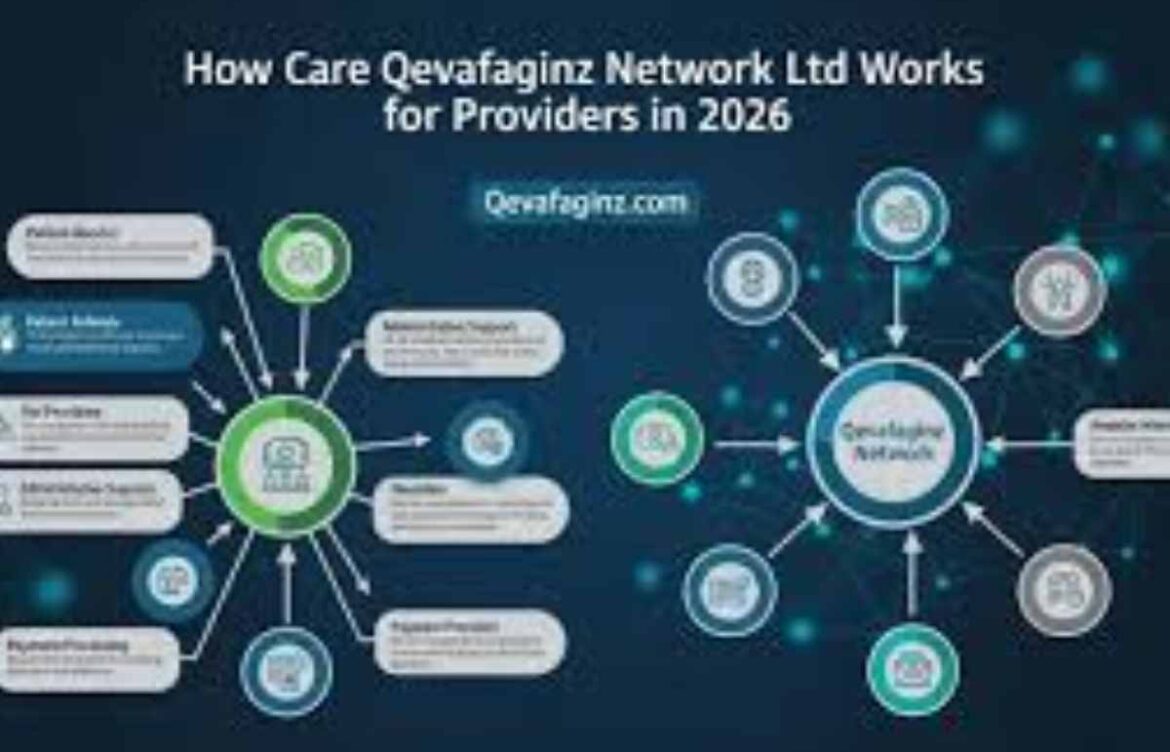
How Care Qevafaginz Network Ltd Works For Providers – Information
Care Qevafaginz Network Ltd operates as a structured intermediary that connects providers to demand while standardizing onboarding, compliance, and service delivery. For providers, success depends less on joining and more on understanding how control, revenue, and accountability are shared.
If you’re a provider exploring this network, you’re probably not asking what it is—you’re asking how it actually works in real life. Will it bring steady work? Who controls pricing? What happens if something goes wrong? And most importantly: Is this model right for the way I want to run my business?
This article answers those questions from a provider’s point of view, in plain language, without sales fluff. The goal is not to persuade you to join, but to help you make a clear decision.
Key Takeaways (Read This First)
-
Providers don’t operate independently inside the network; they operate within a defined system
-
Onboarding and compliance are centralized, but service execution stays with the provider
-
Work allocation is performance- and availability-driven, not random
-
Payments flow through the network, improving predictability but limiting pricing control
-
The model favors providers who value scale and consistency over autonomy
What Care Qevafaginz Network Ltd Actually Is (From the Provider Side)
From a provider’s perspective, Care Qevafaginz Network Ltd is best understood as an operational bridge.
It sits between:
-
Organizations or clients that need services at scale
-
Providers who deliver those services on the ground
This is not the same as:
-
Running your own independent practice
-
Using a gig-style open marketplace
-
Working as an employee or contractor for an agency
Instead, it’s a network model where the company controls access, standards, and coordination, while providers focus on execution.
That distinction matters because many providers join assuming they’ll “mostly work the same way, just with more clients.” In reality, the operating environment changes.
Why Providers Look at Networks Like This in the First Place
Most providers don’t join networks because they’re failing. They join because growth creates friction.
Common pain points include:
-
Inconsistent client acquisition
-
Time lost on admin, billing, and compliance
-
Difficulty scaling without hiring too fast
-
Cash-flow uncertainty
Networks like Care Qevafaginz Network Ltd exist to reduce those problems by standardizing everything around the provider.
But standardization always comes with trade-offs.
Provider Onboarding: Where the Relationship Is Defined
Onboarding is not just paperwork—it’s where the rules of the relationship are set.
Most providers go through:
-
Credential and background verification
-
Documentation and compliance checks
-
Agreement to service standards and reporting requirements
-
Access setup for internal systems or dashboards
This stage filters for reliability, not individuality.
From the provider’s perspective, onboarding answers one key question the network is asking:
“Can this provider deliver consistently within our system?”
If your processes are informal or undocumented, onboarding will feel strict. If you already operate with structure, it usually feels reasonable.
How Providers Actually Receive Work
Work inside the network is allocated, not hunted.
Providers typically receive assignments based on:
-
Availability and declared capacity
-
Service category or specialization
-
Geographic or operational fit
-
Past performance and reliability
This means two important things:
-
You’re not competing with everyone all the time
-
Performance history matters more than aggressive self-promotion
A simple example
-
A small provider with excellent reliability may receive fewer but higher-fit assignments
-
A larger provider may receive higher volume, but with tighter performance scrutiny
The system is designed to reduce risk, not reward hustle.
Service Delivery: Understanding Control Boundaries
One of the most common provider frustrations comes from misunderstanding who controls what.
The network usually controls:
-
Service standards and protocols
-
Client-facing rules and escalation paths
-
Quality benchmarks and compliance checks
Providers usually control:
-
How the work is executed
-
Staffing and internal workflows
-
Day-to-day operational decisions
In practice, this means:
-
You can’t redefine the service model
-
You can optimize how you deliver within it
Providers who try to fight the boundaries often burn out. Providers who learn to work inside them tend to scale smoothly.
Independent vs Network Provider (Qualitative)
| Aspect | Independent | Network-Based |
|---|---|---|
| Autonomy | High | Limited |
| Demand consistency | Variable | More stable |
| Admin burden | High | Shared |
| Margin control | Full | Constrained |
If autonomy is your top priority, this model will feel restrictive.
Payments and Revenue Flow (Without the Jargon)
One of the biggest differences from independent work is how money moves.
The usual flow looks like this:
-
The client pays the network
-
The network processes the payment and applies its rules
-
The provider is paid according to the agreed schedule
For providers, this creates:
-
More predictable payments
-
Less invoicing and follow-up work
-
Less flexibility on pricing and timing
In short, you trade margin control for payment stability.
Some providers see this as a relief. Others see it as a constraint. Neither reaction is negative—it depends on your priorities.
Performance Monitoring: The Invisible Hand of the Network
Once active, providers are continuously evaluated, even if it’s not always visible.
Common performance signals include:
-
Timeliness and responsiveness
-
Adherence to protocols
-
Frequency of issues or escalations
-
Client feedback indicators
Poor performance doesn’t usually mean immediate removal. More often, it leads to:
-
Reduced assignment volume
-
Lower priority in allocation
-
Increased oversight
This approach mirrors broader findings from research on platforms and network-based work by organizations such as Harvard Business Review, McKinsey & Company, and the OECD.
Consistency beats intensity in this model.
Pros and Cons for Providers (An Honest View)
Advantages
-
Access to steady demand
-
Lower cost of client acquisition
-
Reduced administrative burden
-
Clear operational expectations
Limitations
-
Less independence in how you operate
-
Dependence on network policies
-
Limited pricing and negotiation power
This is not a shortcut model. It’s a trade-off model.
Who This Model Is Best For (And Who Should Think Twice)
Good fit if you:
-
Want predictable workflows
-
Are comfortable operating within systems
-
Prefer execution over marketing and sales
-
Aim to scale responsibly
Poor fit if you:
-
Compete on highly customized methods
-
Need full pricing control
-
Dislike oversight or reporting
-
Prefer short-term flexibility
Many providers fail not because the network is “bad,” but because the fit was wrong from the start.
A Note on Geography and Regulation
Operational expectations can vary by region, especially around:
-
Data handling
-
Service documentation
-
Compliance reporting
Providers operating across borders should expect additional layers of oversight. This article is not legal advice, but it’s wise to review local requirements before committing.
FAQS
1. How does Care Qevafaginz Network Ltd work for providers?
It works by connecting providers to demand while enforcing standardized onboarding, service rules, and performance tracking. Providers execute services within a structured framework.
2. Do providers work independently inside the network?
No. Providers retain execution control but operate under network standards, reporting requirements, and allocation rules.
3. How do providers get paid?
Payments typically flow from the client to the network, then to the provider after processing and deductions, improving reliability but limiting pricing control.
4. Is this model better than finding clients directly?
It depends. The network offers stability and reduced admin work, while direct acquisition offers more autonomy and margin control.
5. What type of providers benefit most from this network?
Providers seeking scale, consistent demand, and operational support benefit most.
6. What are the main risks for providers?
Loss of autonomy, dependency on network rules, and reduced work if performance metrics decline.
Final Thoughts
Care Qevafaginz Network Ltd is not a shortcut to growth. It is an operating system.
Providers who succeed treat it as a long-term partnership, not a lead source. Those who fail usually misunderstand the trade-off between autonomy and scale.