
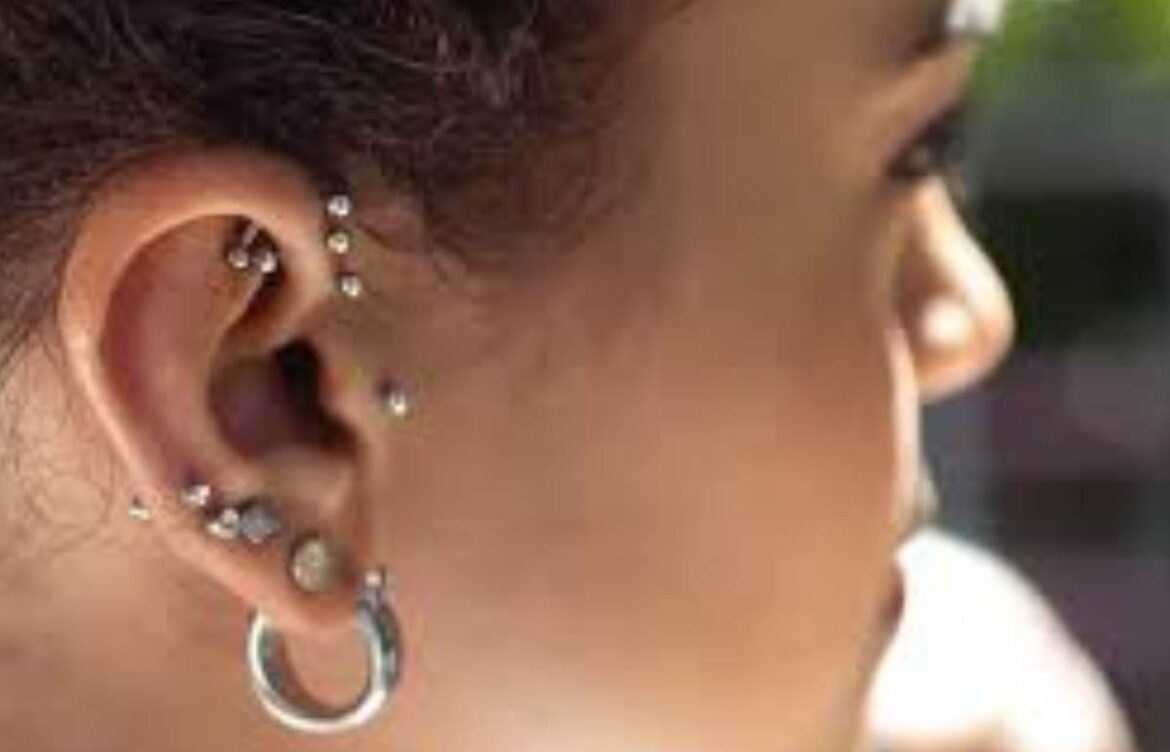
Helix Piercing Healing Time – Guide Month-by-Month
Getting a helix piercing — that gorgeous little cartilage hole in the upper edge of your ear — can be an exciting step in your piercing journey. Whether this is your first body modification or you’re adding to a growing ear stack, one question always pops up:
What Is a Helix Piercing?
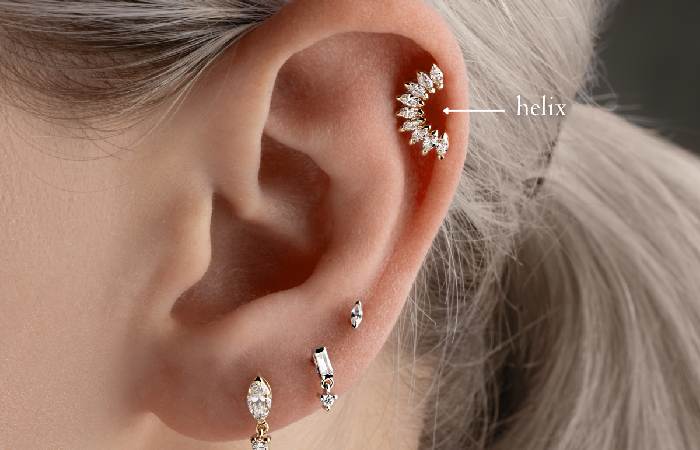
A helix piercing is a type of cartilage piercing located on the upper outer rim of your ear. Unlike earlobe piercings (which are soft and vascular), helix piercings go through cartilage — that firmer part of the ear — which affects healing time.
Cartilage has less blood flow than soft tissue, so it heals more slowly. This is the key reason why helix piercings take significantly longer to fully mend than traditional earlobe piercings.
A helix piercing can also be:
- Single helix – one piercing
- Double helix – two stacked vertically
- Triple helix – three in a row
Each one will heal at roughly similar rates, but having multiple holes might extend your overall care timeline.
How long does it take to heal?
And more importantly — how can you heal well without problems?
In this guide, we’ll break down every detail about the healing process, timelines, common issues, care routines, and realistic expectations so that you know exactly what to expect over the weeks and months following your piercing.
Types of Helix Piercing
| Type of Helix Piercing | Description | Jewelry Used | Style Appeal |
| Standard Helix | A single piercing placed on the outer upper cartilage of the ear. | Studs, small hoops | Simple, classic, beginner-friendly |
| Double Helix | Two helix piercings placed close together. | Studs or hoops | Trendy and layered look |
| Triple Helix | Three piercings in a row along the cartilage. | Matching studs or hoops | Bold and fashionable |
| Forward Helix | Piercing placed on the front upper ear cartilage near the face. | Small studs | Elegant and unique |
| Double Forward Helix | Two piercings in the forward helix area. | Tiny studs | Modern and stylish |
| Triple Forward Helix | Three small piercings in the same front cartilage area. | Minimal studs | Edgy and eye-catching |
| Upper Helix | Positioned higher than the standard helix. | Hoops or studs | High-fashion and noticeable |
| Low Helix | Located closer to the middle outer ear cartilage. | Hoops | Subtle and delicate |
| Industrial Helix | Two helix piercings connected by a bar. | Barbell | Bold and alternative |
| Hidden Helix | Piercing placed under the ear fold, hiding the jewelry from the front. | Flat backs | Minimal and sophisticated |
Helix Piercing Healing Stages
The healing process of a helix piercing happens gradually because cartilage takes longer to recover than soft tissue. Below is a clear table showing each stage of healing.
| Healing Stage | Time Frame | Symptoms & Changes | Care Tips |
| Early / Inflammatory Stage | 1–4 weeks | Swelling, redness, mild pain, warmth, and sensitivity. Slight bleeding or clear fluid may occur. | Clean twice daily with saline, avoid touching, and do not sleep on the pierced ear. |
| Intermediate Stage | 1–3 months | Swelling reduces, but the piercing is still delicate. Occasional tenderness and light discharge are normal. | Continue aftercare, avoid changing jewelry, and protect from irritation. |
| Advanced Healing Stage | 3–6 months | Skin and cartilage begin to strengthen. Less pain and discomfort. The piercing may feel stable but is not fully healed. | Maintain hygiene, avoid tight headphones and rough handling. |
| Late / Maturation Stage | 6–12 months | Complete healing. The tissue becomes strong and flexible. No pain or swelling. | Jewelry can be changed carefully once fully healed. |
| Maintenance Stage | After 12 months | The piercing remains stable but still needs occasional care. | Clean occasionally, use high-quality jewelry, and avoid trauma. |
Typical Healing Timeline
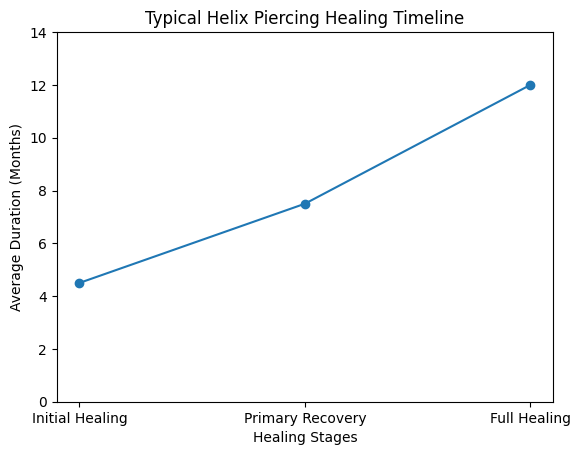
Let’s start with a healing timeline table. These are general ranges — every body is different — but this gives you a realistic benchmark.
| Healing Stage | Typical Duration | What’s Happening |
| Initial healing | ~3–6 months | Surface skin closes, less sensitivity |
| Primary recovery | ~6–9 months | Cartilage slowly reconnects; swelling fades |
| Full healing | ~9–12+ months | Deep tissue healed; jewelry safe to change |
Note: Some sources suggest occasional cartilage healing can stretch up to 18 months (especially if aftercare isn’t ideal).
So while it might look healed after a few months, the inner cartilage can remain fragile — meaning patience truly matters here.
Month-by-Month Healing Breakdown
Weeks 1–2 — The Fresh Piercing
What to expect
- Tenderness and slight swelling
- Some redness or warmth
- Possible light discharge / crusties
- Mild sensitivity in the surrounding area
This early stage is critical — your body is setting up the healing process. Expect some tenderness, but it shouldn’t be extremely painful or ooze foul-smelling discharge.
Months 1–3 — Skin Closes
During this stage:
- Redness and sensitivity begin decreasing
- The piercing looks mostly shut on the outside
- You still should not change jewelry yet
This period is when many people think the piercing is healed, but cartilage heals deeper than just the surface. Patience during this phase prevents complications later.
Months 3–6 — Tissue Strengthens
These months involve more internal healing:
- Swelling continues reducing
- Jewelry becomes less irritating
- Cartilage re-builds slowly from inside
You may start considering jewellery changes at the very end of this window — but only AFTER confirming with your piercer.
Months 6–12+ — Full Maturation
This is the long stretch:
- Cartilage fully knit internally
- Less sensitivity to pressure
- Jewelry swaps are safer
- You can enjoy styling fully healed ears
Complete cartilage healing can take several more months — even into the second year for some people — especially if you sleep on it, have sensitive skin, or don’t follow aftercare consistently.
Healing Timeline vs Other Piercings
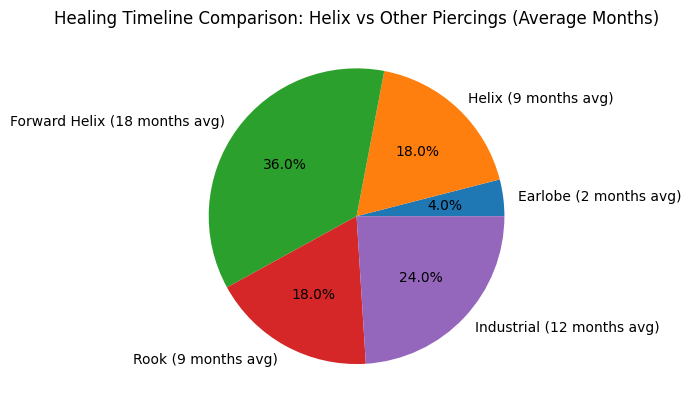
Here’s how helix healing compares to other common ear piercings:
| Piercing Type | Typical Healing |
| Earlobe | ~6–8 weeks |
| Helix | ~6–12+ months |
| Forward Helix | ~12–24 months |
| Rook | ~6–12 months |
| Industrial | ~6–12+ months |
As you can see, helix and other cartilage piercings are not a quick process. This reflects the biology of cartilage repair — slower but deep and purposeful.
Helix Piercing Aftercare: Best Practices
Great aftercare is the difference between smooth healing and complications. Here’s how to care for your piercing like a pro:
Keep It Clean
Clean with sterile saline solution (a gentle saltwater spray) twice a day. Saline helps reduce bacteria and soothe the piercing. Avoid harsh cleaners like alcohol, hydrogen peroxide, or ointments.
Wash Hands First
Always wash hands before touching your piercing — even to clean it. This reduces infection risk.
Avoid Unnecessary Touching
Twisting, rotating, or fiddling with jewelry slows healing and introduces bacteria. Only touch for cleaning.
Protect While You Sleep
Try not to sleep on your piercing, or use a travel pillow to avoid pressure. Compression slows healing and may lead to bumps.
Stay Away From Pools & Saunas
Public pools, hot tubs, or sweaty environments can house bacteria that irritate piercing sites. Better to skip them in early months.
Choose the Right Jewelry
Stick to implant-grade titanium or surgical steel initial jewelry — these materials are hypoallergenic and safe for cartilage. Changing too early can trigger irritation.
Tips for Faster Healing of a Helix Piercing
Helix piercings take time to heal because they involve cartilage. Following proper care and healthy habits can help speed up the healing process and prevent infection.
Clean the Piercing Regularly
Clean your helix piercing twice a day using a sterile saline solution or saltwater. This helps remove bacteria and reduces the risk of infection. Avoid alcohol or strong antiseptics as they may irritate the cartilage.
Avoid Touching or Twisting the Jewelry
Touching your piercing with unclean hands introduces bacteria and slows healing. Do not rotate or twist the jewelry unless recommended by your piercer.
Choose High-Quality Jewelry
Use materials like titanium, surgical steel, or gold to prevent allergic reactions and irritation. Many celebrities such as Rihanna prefer hypoallergenic jewelry for cartilage piercings.
Sleep on the Opposite Side
Sleeping on the pierced ear can cause pressure, swelling, and pain. Use a travel pillow or sleep on the opposite side to protect your ear.
Avoid Swimming in Dirty Water
Pools, lakes, and oceans may contain bacteria that can lead to infection. If swimming is necessary, protect your piercing and clean it afterward.
Maintain Good Hygiene
Keep your hair, pillowcases, and phone clean. Dirt and oils can irritate the piercing and delay healing.
Do Not Change Jewelry Too Early
Changing jewelry before the piercing heals can damage the tissue and restart the healing process. Wait at least 6–12 months or until your piercer confirms healing.
Eat a Healthy Diet
A balanced diet rich in vitamins, protein, and minerals helps your body repair tissue faster. Hydration also supports healing.
Reduce Stress and Get Enough Sleep
Good sleep and stress management improve immunity and help the body heal naturally.
Visit a Professional Piercer for Checkups
Regular checkups ensure your piercing is healing properly and help prevent complications.
Common Healing Myths (and Real Answers)
Let’s debunk a few myths you might read online:
Myth: Healing Takes Only 2 Months
Some people online think cartilage heals quickly — but that’s usually surface healing only. Full internal cartilage recovery takes much longer.
Myth: Alcohol/Sterile Wipes Speed Up Healing
Alcohol and antiseptic wipes can actually dry, irritate, and injure skin — slowing healing. Stick with saline.
Myth: You Can Change Jewelry As Soon As It Looks Healed
Just because redness has gone doesn’t mean cartilage is healed. Always consult your piercer before swapping jewelry. Healing can still be internal.
Signs Your Helix Piercing Is Healing Properly
A helix piercing takes time to heal because cartilage heals slowly. Recognizing normal healing signs helps you avoid unnecessary worry and prevents complications. Many celebrities such as Rihanna and Kylie Jenner maintain proper aftercare routines to ensure safe healing.
Mild Swelling and Redness in the Early Weeks
It is normal to experience slight swelling, redness, and tenderness during the first few weeks. These symptoms gradually decrease as healing progresses.
Light or Clear Fluid Discharge
A small amount of clear or pale yellow fluid (lymph) may appear around the piercing. This is part of the natural healing process and usually forms a thin crust.
Reduced Pain Over Time
Pain and sensitivity should gradually decrease. You may still feel discomfort if the ear is accidentally touched, but it becomes less intense.
No Severe or Persistent Irritation
A properly healing helix piercing will not show extreme redness, heat, or spreading inflammation.
Skin Around the Piercing Looks Healthy
The surrounding skin should look normal, without darkening, swelling, or thick bumps.
Jewelry Moves Comfortably (After Initial Healing)
After a few months, the jewelry may move slightly without pain. This shows that the tissue is forming around the piercing.
Gradual Decrease in Crusting
The amount of dried fluid or crust around the jewelry will reduce as the piercing heals.
No Signs of Infection
There should be no foul smell, green or thick yellow pus, or severe swelling.
Signs of Delayed Healing or Infection in a Helix Piercing
Helix piercings involve cartilage, so they take longer to heal and are more prone to complications if not cared for properly. Recognizing warning signs early can help prevent serious problems. Many public figures such as Rihanna and Kylie Jenner emphasize professional care and hygiene to avoid infection.
Persistent or Increasing Pain
Mild discomfort is normal at first, but worsening or long-lasting pain after several weeks may indicate delayed healing or infection.
Severe or Prolonged Swelling
Swelling should reduce within a few weeks. If the ear remains swollen or becomes more swollen after the initial stage, it may be a sign of infection.
Intense Redness or Warmth
A hot, red, or inflamed area around the piercing suggests irritation or bacterial infection.
Thick Yellow, Green, or Foul-Smelling Discharge
Normal healing produces clear fluid. Thick, colored, or bad-smelling pus is a major warning sign.
Formation of Painful Bumps
Raised lumps or bumps (such as irritation bumps or keloids) around the piercing may indicate delayed healing or trauma.
Bleeding After the Initial Healing Stage
Occasional bleeding in the first few days is normal. However, repeated bleeding later may signal irritation or infection.
Fever or Feeling Unwell
If infection spreads, symptoms such as fever, fatigue, or body aches may occur. This requires immediate medical attention.
Jewelry Sinking Into the Skin
Swelling or infection can cause the jewelry to press into the ear tissue, which needs urgent care.
No Improvement After Several Months
If the piercing still looks irritated or painful after 3–6 months, healing may be delayed.
Final Thoughts: Patience Is Part of the Process
You might be tempted to fast-forward to cute jewelry, but waiting until your body is ready makes your piercing look better and feel better in the long run. Healing timelines are guides, not guarantees, and your unique body makes all the difference.
If you stick to cleaning, avoid unnecessary touching, sleep on the opposite side, and protect your ear from trauma, there’s every chance your helix piercing will heal beautifully — and be a source of style and confidence for years to come.
Also Read: https://www.simplyhawk.com