
What is Adobe and Its Applications? – A Complete Guide
Adobe – Assuming that you have ever been editing a picture, creating a poster, or reading a PDF document or have ever been online and viewed some digital content, you will have encountered Adobe software at one point or the other. It is one of the most powerful technology firms in the globe that has influenced the manner in which people and companies generate, edit, and transmit digital information over the years.
Adobe tools have a great presence in the world of graphic designers and photographers as well as marketers and filmmakers. It has a strong software ecosystem that enables a user to create graphics, edit videos, handle documents, create websites, and even conduct digital marketing campaigns.
But what exactly is Adobe? Why then is it so important in the digital world? And what are the most typical things people utilize on day-to-day basis? This final guide will speak about what is Adobe, its history, its products, its vital applications and the role it plays in such spheres of life as design, marketing, education, and business.
What is Adobe?
Adobe is a global software corporation that produces software in the creative design industry, multimedia editing, digital marketing, and document management. The company is most famed in the production of industry standard software that finds application in graphic designing, video editing, photography, web designing, and publishing.
Adobe is an information technology firm which provides designing, editing, managing and sharing of digital content. Adobe has a broad ecosystem of cloud-based products today including:
- Creative software
- Document management tools
- Online marketing channels.
- AI-powered design tools
These are provided on the three primary platforms:
- Adobe Creative Cloud
- Adobe Document Cloud
- Adobe Experience Cloud
All platforms have a different purpose but they are combined to create the foundation of Adobe ecosystem.
Brief History of Adobe
Adobe is a company that was established in 1982 in California by John Warnock and Charles Geschke. The company has its initial orientation towards digital printing and publishing software development.
Among its first innovations was the page description language of Adobe PostScript, a revolution in desktop publishing.
Afterwards Adobe launched numerous products which turned into industry standards.
Key Milestones of Adobe
| Year | Milestone |
| 1982 | Adobe founded |
| 1985 | PostScript introduced |
| 1990 | Launch of Adobe Photoshop |
| 1993 | Launch of Adobe Acrobat and PDF format |
| 2005 | Acquisition of Macromedia |
| 2013 | Launch of Creative Cloud subscription model |
| 2020+ | Integration of AI via Adobe Sensei |
Today, Adobe serves millions of users worldwide, from freelancers to large enterprises.
Adobe’s Main Product Platforms
It organise its tools into three main cloud platforms.
Adobe Creative Cloud
Adobe Creative Cloud is the most popular Adobe platform. It provides creative tools for designing, editing, and producing digital media.
It includes software for:
- Graphic design
- Video editing
- Animation
- Photography
- UI/UX design
- Illustration
Popular Creative Cloud Applications
| Application | Main Purpose |
| Adobe Photoshop | Photo editing and digital art |
| Adobe Illustrator | Vector graphics and logo design |
| Adobe Premiere Pro | Video editing |
| Adobe After Effects | Motion graphics and visual effects |
| Adobe InDesign | Magazine and book layout |
| Adobe XD | UI/UX design |
Creative Cloud is widely used by designers, filmmakers, social media creators, and marketing professionals.
Adobe Document Cloud
Adobe Document Cloud focuses on document management and digital workflows.
It is built around PDF technology, which Adobe originally invented.
Major Document Cloud Tools
| Tool | Function |
| Adobe Acrobat | Create, edit, and manage PDF files |
| Adobe Acrobat Reader | View and annotate PDF documents |
| Adobe Sign | Digital signatures and document approval |
Document Cloud is widely used in:
- Business documentation
- Legal paperwork
- Contracts
- Education
- Government services
Adobe Experience Cloud
Adobe Experience Cloud is designed for digital marketing and customer experience management.
It helps businesses analyze customer data and deliver personalized marketing campaigns.
Experience Cloud Solutions
| Solution | Purpose |
| Adobe Analytics | Website traffic and behavior analysis |
| Adobe Target | Personalization and A/B testing |
| Adobe Campaign | Marketing automation |
| Adobe Experience Manager | Content management system |
Large companies rely on Experience Cloud to manage customer journeys across websites, mobile apps, and social platforms.
Most Popular Adobe Applications Explained
Let’s explore some of Adobe’s most widely used tools and their real-world applications.
Adobe Photoshop

Adobe Photoshop is the world’s most popular photo editing software.
Main Uses
- Photo editing and retouching
- Digital painting
- Graphic design
- Social media graphics
- Website images
Key Features
| Feature | Description |
| Layers | Allows complex image editing |
| Smart Objects | Non-destructive editing |
| Filters | Add artistic effects |
| AI tools | Automatic selections and enhancements |
Photographers, designers, and marketers rely heavily on Photoshop.
Adobe Illustrator
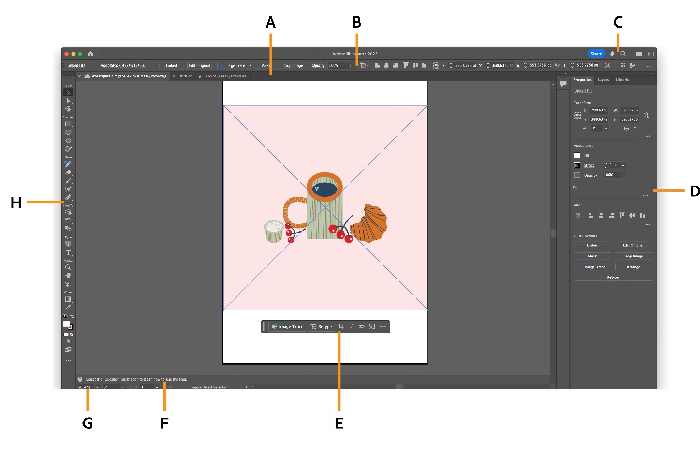
Adobe Illustrator is a vector graphics editor used for creating scalable artwork.
Main Uses
- Logo design
- Icons
- Infographics
- Typography
- Branding materials
Unlike Photoshop, Illustrator uses vector graphics, which means images can be scaled without losing quality.
Illustrator vs Photoshop
| Feature | Illustrator | Photoshop |
| Graphics type | Vector | Raster |
| Best for | Logos and illustrations | Photos |
| File scaling | Infinite | Limited |
| Typical users | Designers, illustrators | Photographers, marketers |
Adobe Premiere Pro
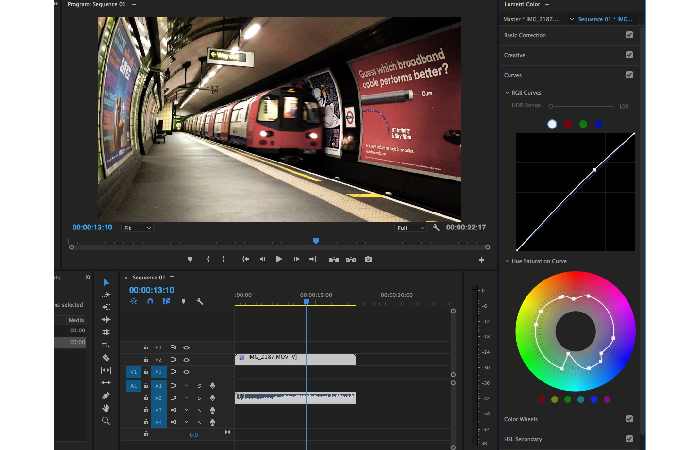
Adobe Premiere Pro is a professional video editing software used in filmmaking, YouTube production, and broadcasting.
Main Uses
- Film editing
- YouTube videos
- Social media content
- Documentary production
- Commercial advertisements
Key Features
| Feature | Description |
| Timeline editing | Arrange clips easily |
| Color grading | Professional color correction |
| Audio editing | Improve sound quality |
| Effects | Add transitions and effects |
Many Hollywood films and YouTube creators use Premiere Pro.
Adobe After Effects

Adobe After Effects is a motion graphics and visual effects software.
Main Uses
- Motion graphics
- Film visual effects
- Animated titles
- YouTube intros
- Explainer videos
Example Applications
| Industry | Use Case |
| Film | CGI and effects |
| Marketing | Animated advertisements |
| YouTube | Motion graphics |
| Television | Broadcast graphics |
After Effects is often used alongside Premiere Pro for professional video production.
Industries That Use Adobe Software
Adobe tools are used across many industries worldwide.
Major Industries Using Adobe
| Industry | Adobe Tools Used |
| Graphic Design | Photoshop, Illustrator |
| Film & Media | Premiere Pro, After Effects |
| Publishing | InDesign |
| Web Design | Adobe XD |
| Marketing | Experience Cloud |
| Business | Acrobat |
Adobe’s versatility makes it essential in the modern digital economy.
Advantages of Adobe Software
Adobe tools remain popular because of their powerful capabilities.
Key Benefits
| Advantage | Explanation |
| Industry standard | Used by professionals globally |
| Powerful features | Advanced editing capabilities |
| Cloud integration | Work across devices |
| Collaboration | Easy sharing with teams |
| AI tools | Automation using Adobe Sensei |
Limitations of Adobe Software
Despite its strengths, Adobe also has some drawbacks.
| Limitation | Explanation |
| Expensive subscription | Monthly fees |
| High system requirements | Needs powerful computers |
| Learning curve | Complex for beginners |
| Large installation size | Uses significant storage |
However, many professionals consider the cost worthwhile because of the advanced features and reliability.
Adobe Pricing Model
Adobe moved from one-time software purchases to a subscription model in 2013.
Creative Cloud Pricing Structure
| Plan | Best For |
| Single App | Individual users |
| Photography Plan | Photographers |
| All Apps Plan | Designers and agencies |
| Enterprise Plan | Large businesses |
Subscriptions include updates, cloud storage, and collaboration tools.
Adobe and Artificial Intelligence
Adobe has integrated artificial intelligence through Adobe Sensei.
AI Features in Adobe Tools
| Tool | AI Capability |
| Photoshop | Object selection |
| Premiere Pro | Auto scene detection |
| Acrobat | Smart document scanning |
| Experience Cloud | Customer behavior prediction |
AI helps automate repetitive tasks, making creative workflows faster.
Future of Adobe
Adobe continues to innovate in several areas:
- Artificial intelligence design tools
- Cloud-based collaboration
- 3D content creation
- Augmented reality design
- Marketing automation
With the growth of digital media and online businesses, Adobe’s tools will likely remain central to the creative industry.
Conclusion
Adobe has changed how individuals create and communicate in digital content. Its software is used to create photos and logos, create films and handle business documents, among other things, making it the engine of the modern digital world. Adobe has provided services through platforms, such as Creative Cloud, Document Cloud, and Experience Cloud to its professionals, business and individuals.
Photoshop and Adobe applications like Illustrator, Premiere Pro, After Effects, and Acrobat have turned out to be industry standards that are used by millions of people around the world. The Adobe software can provide you with unlimited creative and professional opportunities, regardless of whether you are a designer, marketer, filmmaker, entrepreneur, or student. With the continued evolving technology, the use of AI and cloud collaboration, Adobe will be among the pioneers of digital creativity and innovation in the years ahead.