
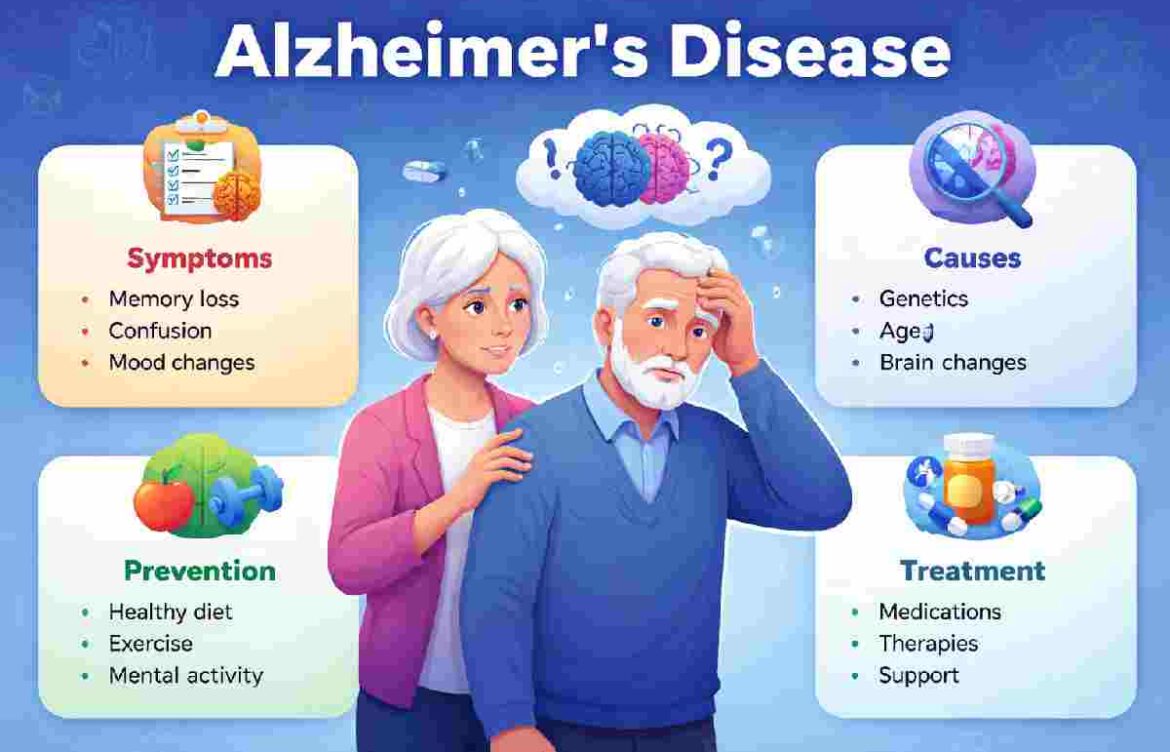
Alzheimer’s Disease: A Human-Centered Guide to Understanding, Coping, and Caring
It is not merely about forgetting -Alzheimer’s disease is a life changing, individual experience to both the individual afflicted as well as the family that cares about the individual. You know how sickeningly emotional it will feel when you have ever watched the light drain out of someone you know – when they cannot remember names, or the name of a place or even their own name.
This is the step by step guide through it in a very simple and human manner so that you can understand what is happening, what to expect and prepare to come and most importantly, handle sensitivity and gracefully.
What Is Alzheimer’s Disease?
Alzheimer’s Disease is a progressive brain disorder that slowly destroys memory, thinking ability, and eventually the ability to carry out even the simplest daily tasks.
It is the most common cause of dementia, accounting for about 60–80% of cases worldwide.
At its core, Alzheimer’s affects how brain cells communicate. Over time, these cells get damaged and die, leading to a steady decline in cognitive function.
A Simple Breakdown
| Aspect | Explanation |
| Type | Neurodegenerative disease |
| Main Impact | Memory, thinking, behavior |
| Progression | Gradual and irreversible |
| Common Age Group | 65+ (but can occur earlier) |
| Cure | No cure yet, but treatments can help |
What Happens Inside the Brain?
To really understand Alzheimer’s, it helps to look at what’s happening inside the brain—without getting too technical.
There are two main culprits:
- Amyloid plaques – Sticky protein clumps that build up between brain cells
- Tau tangles – Twisted fibers inside brain cells that block communication
These disrupt normal brain function and eventually kill brain cells. As more cells die, the brain actually shrinks in size.
Early Signs You Shouldn’t Ignore

Alzheimer’s doesn’t show up overnight. It starts subtly, often mistaken for “normal ageing.”
Here are some early signs:
- Forgetting recently learned information
- Asking the same question repeatedly
- Struggling to follow conversations
- Misplacing items and not retracing steps
- Trouble planning or solving problems
- Losing track of time or dates
Quick Comparison: Normal Ageing vs Alzheimer’s
| Normal Aging | Alzheimer’s Symptoms |
| Occasionally forgetting names | Frequently forgetting close family names |
| Missing a bill payment once | Inability to manage finances |
| Getting confused briefly | Regular confusion about time/place |
| Misplacing items occasionally | Accusing others of stealing |
Stages of Alzheimer’s Disease
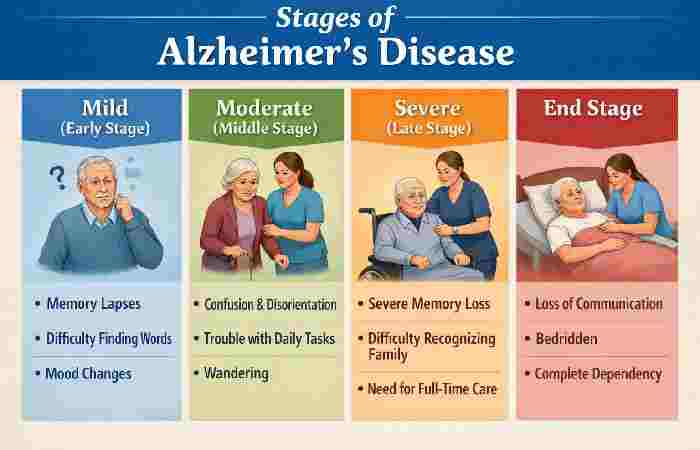
Alzheimer’s progresses in stages. Knowing these can help you prepare emotionally and practically.
Early Stage (Mild)
- Memory lapses
- Difficulty finding words
- Losing track of tasks
- Still independent but struggling
Middle Stage (Moderate)
- Increased confusion
- Difficulty recognizing people
- Personality changes
- Needing help with daily activities
Late Stage (Severe)
- Loss of speech
- Inability to walk or swallow properly
- Full dependence on caregivers
- Increased vulnerability to infections
Causes and Risk Factors
There isn’t a single cause of Alzheimer’s—it’s a mix of genetic, environmental, and lifestyle factors.
Key Risk Factors
| Risk Factor | Description |
| Age | Biggest risk factor |
| Genetics | Family history increases risk |
| Lifestyle | Poor diet, inactivity |
| Heart health | High BP, diabetes linked |
| Head injuries | Past trauma may increase risk |
Lifestyle Factors That Matter
- Lack of exercise
- Smoking
- Poor sleep
- Chronic stress
- Social isolation
These don’t guarantee Alzheimer’s, but they increase the risk over time.
How Is Alzheimer’s Diagnosed?
There’s no single test that says “yes, this is Alzheimer’s.” Doctors use a combination of methods:
- Medical history review
- Cognitive and memory tests
- Brain imaging (MRI or CT scans)
- Blood tests (to rule out other causes)
Early diagnosis is crucial—it allows for better planning and treatment.
Treatment Options: What Can Be Done?
While there is no cure yet, treatments can help manage symptoms and improve quality of life.
Medications
| Type | Purpose |
| Cholinesterase inhibitors | Help memory and thinking |
| Memantine | Regulates brain activity |
| Antidepressants | Manage mood changes |
Non-Drug Approaches
- Cognitive therapy
- Routine-based living
- Music and art therapy
- Physical activity
These often make a huge emotional difference, even if they don’t stop the disease.
Daily Life with Alzheimer’s
Living with Alzheimer’s is about adaptation—not perfection.
Simple Strategies That Help
- Keep routines consistent
- Use labels around the house
- Maintain a calm environment
- Break tasks into small steps
- Use reminders and alarms
Even small adjustments can reduce confusion and anxiety.
Caring for Someone with Alzheimer’s
Caregiving is both rewarding and exhausting. It requires patience, empathy, and resilience.
Practical Caregiving Tips
- Don’t argue – It increases frustration
- Use simple language – Short and clear sentences
- Be patient – Responses may take time
- Focus on feelings, not facts
- Create a safe environment
Emotional Reality of Caregiving
Let’s be honest—it’s hard.
You may feel:
- Grief (even while they’re still alive)
- Frustration
- Guilt
- Burnout
And that’s okay. You’re human.
Safety Considerations
As the disease progresses, safety becomes a major concern.
Key Safety Areas
| Area | Precaution |
| Home | Remove sharp objects, install locks |
| Kitchen | Supervise cooking |
| Driving | Evaluate ability early |
| Medication | Use pill organizers |
| Wandering | Use tracking devices |
Nutrition and Brain Health
Diet plays a supportive role in brain health.
Brain-Friendly Foods
- Leafy greens
- Nuts and seeds
- Berries
- Fish (rich in omega-3)
- Whole grains
Foods to Limit
- Processed foods
- Sugary drinks
- Excess salt
- Trans fats
Prevention: Can Alzheimer’s Be Avoided?
There’s no guaranteed way to prevent Alzheimer’s, but you can reduce your risk.
Healthy Habits That Matter
- Stay physically active
- Keep your mind engaged
- Maintain social connections
- Eat a balanced diet
- Manage stress
Think of it as “brain maintenance.”
The Emotional Side of Alzheimer’s
Alzheimer’s isn’t just a medical condition—it’s deeply emotional.
For Patients
- Fear of losing identity
- Confusion and frustration
- Anxiety about the future
For Families
- Watching personality changes
- Losing shared memories
- Role reversal (child becomes caregiver)
This emotional layer is often the hardest part.
Technology and Alzheimer’s Care
Modern tools are making caregiving easier.
Helpful Tools
| Tool Type | Example Use |
| GPS trackers | Prevent wandering |
| Reminder apps | Medication alerts |
| Smart home devices | Voice assistance |
| Health monitors | Track vitals |
Technology doesn’t replace care—but it supports it.
Myths vs Facts
Let’s clear up some common misconceptions.
| Myth | Reality |
| It’s just normal aging | It’s a serious disease |
| Only old people get it | Younger people can too |
| Memory loss is the only symptom | It affects behavior and thinking too |
| Nothing can help | Treatments can improve quality of life |
When to See a Doctor
Don’t wait too long. Early action makes a difference.
Seek help if you notice:
- Frequent memory lapses
- Difficulty completing familiar tasks
- Changes in mood or personality
- Confusion with time or place
Final Thoughts
Alzheimer’s Disease changes lives—but it doesn’t erase love, connection, or dignity.
Even when memories fade, emotions often remain. A smile, a familiar song, or a gentle touch can still mean everything.
If you’re dealing with Alzheimer’s—whether personally or through a loved one—remember this:
- You’re not alone
- Support is available
- Small moments still matter
And sometimes, those small moments are the ones that stay with us the longest.