
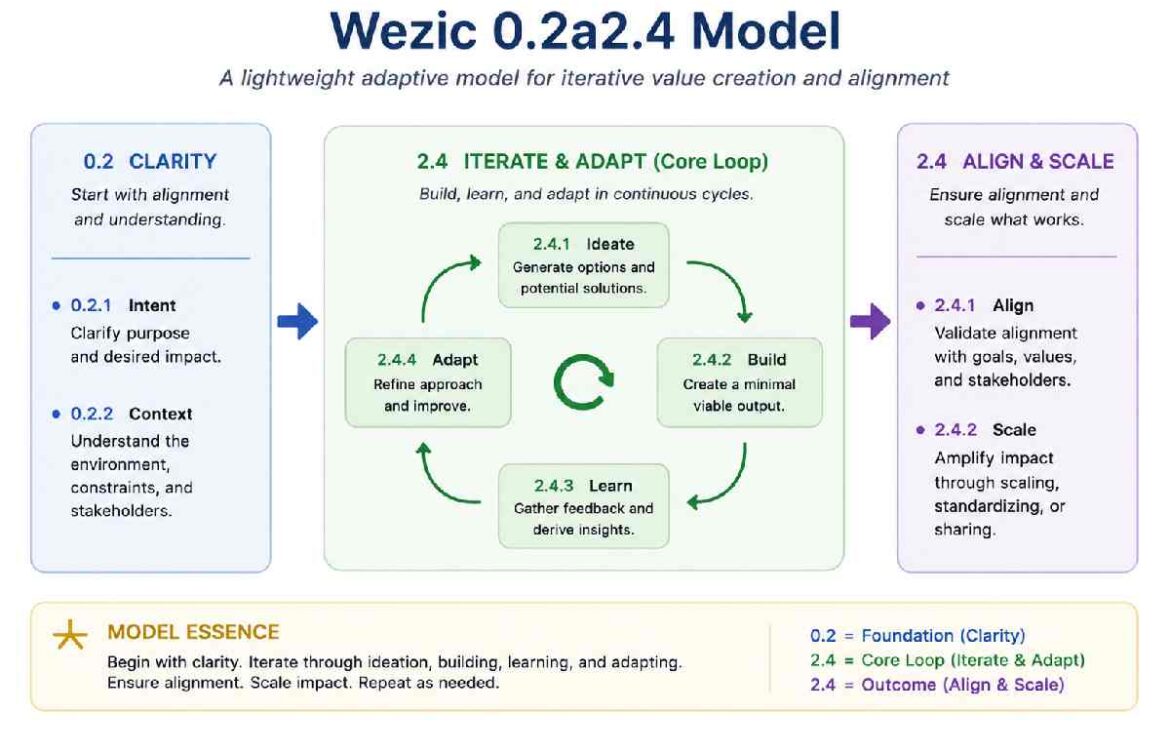
Wezic0.2a2.4 Model, Philippines – A Deep Dive Into the Emerging Innovation
When I first came across the term “wezic0.2a2.4 model, Philippines,” I’ll be honest—it sounded like one of those complex codes you’d usually ignore. But as I delved deeper into it, I learned that there is a curious background story to this whole concept. And, be it a technical implementation, system architecture or a popular niche model in the Philippines, there seems to be a burgeoning curiosity around this.
If you’re here to find out what it is, what it does and what is causing people to discuss this, then you are in the right place.
What is the Wezic0.2a2.4 Model? (Definition)
Wezic0.2a2.4 model refers to a structured system or framework that is believed to be used in digital, computational, or technological environments—possibly linked to software modeling, AI structures, or data-driven systems.
Simple Definition:
Wezic0.2a2.4 model. This is a modular model for processing, analyzing and improving structured data/operations in a certain system environment. Although official documents are generally not easy to find, the names of models already provides the hints:
Wezic – likely a platform, system, or project name
0.2a2.4 – Versioning (indicating updates, iterations, or builds)
Why Is the Wezic0.2a2.4 Model Trending in the Philippines?

The Philippines has become a growing hub for:
Tech outsourcing
Software development
AI and data analytics
Startup ecosystems
So, when a model like this appears, it often ties into:
Local innovation projects
Research-based frameworks
Tech company deployments
Academic or experimental models
Key Reasons for Popularity
Rising demand for automation systems
Growth in AI and machine learning
Increased focus on digital transformation
Strong presence of IT outsourcing companies
Core Features of the Wezic0.2a2.4 Model
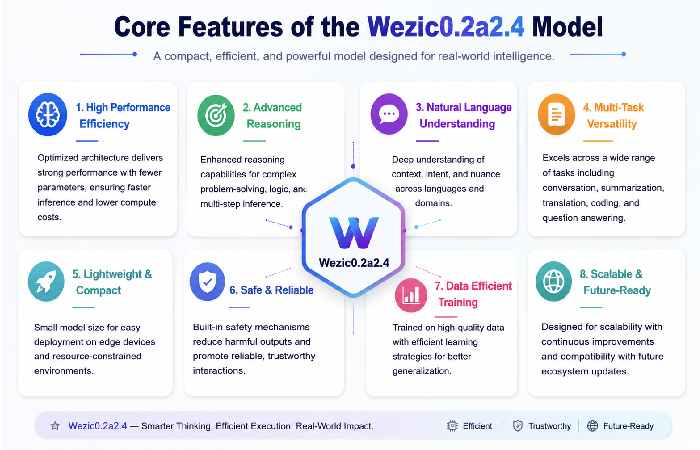
Let’s break down what makes this model stand out.
- Modular Structure
Instead of being one rigid system, it’s built in parts—making it flexible.
- Version-Based Evolution
The “0.2a2.4” suggests continuous improvement and iteration.
- Scalable Framework
It can likely handle both small and large-scale operations.
- Data Processing Capability
Designed to manage structured and semi-structured data efficiently.
Feature Breakdown Table
| Feature | Description | Benefit |
| Modular Design | Built in independent components | Easy customization |
| Version Control | Updated in iterations (0.2a2.4 format) | Continuous improvement |
| Scalability | Adapts to different workloads | Suitable for startups & enterprises |
| Data Optimization | Processes structured data efficiently | Faster performance |
| Integration Friendly | Can work with other systems | Flexible usage |
How the Wezic0.2a2.4 Model Works?
In simple terms if I were to describe how this would work:
It is a learning machine that takes input, passes it through layers, and then output optimized results.
Basic Workflow
Input Layer
Raw data or commands enter the system
Processing Layer
Algorithms analyze and transform data
Optimization Layer
Enhances performance or accuracy
Output Layer
The final result is generated
Workflow Table
| Stage | Function | Example |
| Input | Data entry | User input, datasets |
| Processing | Analysis | Pattern recognition |
| Optimization | Improvement | Speed or accuracy boost |
| Output | Result generation | Reports, predictions |
Applications of Wezic0.2a2.4 Model in the Philippines
This is where things get interesting. The model isn’t just theoretical—it has practical potential.
- Business Automation
Companies can automate repetitive tasks like:
Data entry
Customer support
Workflow management
- AI & Machine Learning
Used in:
Predictive analytics
Recommendation systems
Fraud detection
- Education Sector
Universities and research institutions may use it for:
Experimental models
Data simulations
Academic research
- Government Digital Systems
Potential for:
E-governance
Public data management
Smart city initiatives
Use Case Table
| Sector | Application | Impact |
| Business | Process automation | Saves time & cost |
| AI/ML | Predictive modeling | Better decision-making |
| Education | Research frameworks | Innovation growth |
| Government | Digital services | Improved efficiency |
Advantages of the Wezic0.2a2.4 Model
Let’s talk real benefits—because that’s what matters.
- Flexibility
You can adapt it to different industries.
- Cost Efficiency
Automation reduces manual effort.
- Continuous Improvement
Version updates ensure it evolves.
- High Performance
Optimized processing leads to faster results.
Advantages Table
| Advantage | Why It Matters |
| Flexibility | Works across multiple industries |
| Cost Efficiency | Reduces operational costs |
| Performance | Faster and more accurate results |
| Scalability | Grows with your needs |
Challenges and Limitations
Now let’s keep it real—no system is perfect.
- Lack of Documentation
Not widely documented, which makes it harder to understand.
- Learning Curve
Requires technical knowledge.
- Limited Awareness
Still not mainstream.
- Integration Complexity
May require customization to fit existing systems.
Challenges Table
| Challenge | Description | Solution |
| Limited Info | Not widely explained online | Research & experimentation |
| Technical Barrier | Requires expertise | Training & upskilling |
| Integration Issues | Hard to merge with systems | Use APIs or middleware |
| Awareness | Not popular yet | Industry adoption |
Wezic0.2a2.4 Model vs Traditional Models
Here’s where you see the difference clearly.
| Aspect | Wezic0.2a2.4 Model | Traditional Models |
| Structure | Modular | Fixed |
| Updates | Continuous | Occasional |
| Scalability | High | Limited |
| Flexibility | Strong | Low |
| Performance | Optimized | Standard |
Future of the Wezic0.2a2.4 Model in the Philippines
If you ask me where this is heading, I’d say:
It’s still early—but the potential is huge.
Expected Trends
More adoption in startups
Integration with AI platforms
Use in fintech and healthcare
Expansion into cloud-based systems
Already on their way to this type of digital transformation, this type of model might have a place in the future of the Philippines.
To whom this type of model may be of importance:
It might be something that anyone under one of the following profiles would want to read on:
Developers
Data analysts
Tech entrepreneurs
IT students
Researchers
Practical Example (Simple Scenario)
Let’s say a company wants to:
Analyze customer behavior
Predict buying patterns
Automate recommendations
The Wezic0.2a2.4 model could:
Collect user data
Process behavior patterns
Optimize recommendations
Deliver personalized results
Implementation Considerations
Before jumping in, here are a few things to think about:
Technical Requirements
Programming knowledge
Data handling skills
System integration capability
Business Considerations
Cost vs benefit
Long-term scalability
Maintenance requirements
Implementation Table
| Factor | Requirement |
| Skills | Programming & data analysis |
| Infrastructure | Servers or cloud systems |
| Budget | Depends on scale |
| Maintenance | Regular updates needed |
Is the Wezic0.2a2.4 Model Worth It?
Short answer? It depends.
If you’re:
Running a tech-driven business
Working with data-heavy systems
Exploring AI or automation
Then yes—it could be valuable.
But if you’re just starting out without technical backing, it might feel overwhelming.
Conclusion
The wezic0.2a2.4 model, Philippines is something more than simply a technical term- it signals the emerging era of digital frameworks driven by flexibility, scalability, and high-performance capabilities.
Although its usage may still be developing, its applications in fields ranging from business, AI, education, to government services make it a prospect to observe closely.
And who knows? A few years from now, this could be one of those models everyone suddenly starts talking about.